
Water Heater Regulations
The 2027 Zero-NOx Water Heater Rule: What Contra Costa Homeowners Need to Know
BAAQMD Rule 9-6 prohibits selling or installing a gas water heater under 75,000 BTU/hr that was manufactured after January 1, 2027 and emits any NOx. It does not require you to replace a working heater. Units manufactured before that date stay legal to install, and larger units — including most gas tankless — fall under 2031 instead.
This rule is being amended right now
The January 1, 2027 date is adopted but not settled. The Air District has published draft amendments that would push several categories to 2031 and add exemptions. Public comment closes August 13, 2026, and the Board is tentatively scheduled to vote in November 2026. Anything you read that presents 2027 as final — including a lot of what currently ranks for this search — is out of date. I re-check this page against the primary sources and will update it after the vote. Next scheduled review: December 1, 2026.
What the rule actually says
The rule is Regulation 9, Rule 6 of the Bay Area Air Quality Management District, amended March 15, 2023. It sets an emission standard, not a fuel ban: a covered water heater may emit no more than zero nanograms of nitrogen oxides per joule of heat output. In practice nothing that burns natural gas meets that, which is why it gets reported as a gas ban — but the distinction between an equipment standard and a usage ban is the whole reason your existing heater is safe.
The operative wording matters, so here it is in plain terms: no person may sell, offer for sale, or install within the district a natural gas-fired water heater manufactured after the compliance date that exceeds the standard. The obligation lands on the equipment's manufacture date. That single detail changes almost every practical question a homeowner has, and it is the thing most articles about this rule get wrong.
The three dates that matter
January 1, 2027
Water heaters under 75,000 BTU/hr
Typical residential storage tanks — the 40- and 50-gallon gas units in most Contra Costa garages and closets. This is the date everyone is talking about, and it is the one still being amended.
January 1, 2029
Residential and commercial furnaces
Rule 9-4, not 9-6. Separate date, separate equipment. Residential fan-type central furnaces already had an ultra-low-NOx standard from January 1, 2024.
January 1, 2031
Water heaters from 75,000 to 2 million BTU/hr
Commercial and multifamily equipment — and, importantly for a lot of houses, most residential gas tankless units, which are rated well above 75,000 BTU/hr.
It is a manufacture date, not a purchase deadline
Because the standard attaches to when a unit was built, a gas water heater manufactured in, say, November 2026 does not become illegal to sell or install on January 1, 2027. It stays legal while it exists. Distributors and supply houses will carry existing stock into 2027, and installing it is compliant.
So the honest version of “what happens after January 1, 2027” is not a wall. It is a tapering supply of gas units, at prices that will probably firm up as that supply thins, alongside compliant equipment that is available immediately. What I would not do is treat the date as a reason to replace a healthy water heater in December 2026. Buying a tank you do not need in order to beat a deadline that may itself move is the most expensive way to respond to this rule.
Nobody is making you replace a working heater
There is no retrofit mandate. No inspection will flag your existing water heater, no permit trigger forces an upgrade, and repair stays legal — thermocouples, gas valves, anode rods, T&P valves, all of it. A tank installed in 2024 will run out its natural life well into the 2030s and that is entirely permitted.
Where this does bite is the day yours fails. That is a decision made under pressure, usually with water on the floor, and it is the reason to read this page now rather than then. Knowing in advance whether your house can take a heat pump unit is worth more than any amount of deadline anxiety.
If you have gas tankless, you are probably looking at 2031
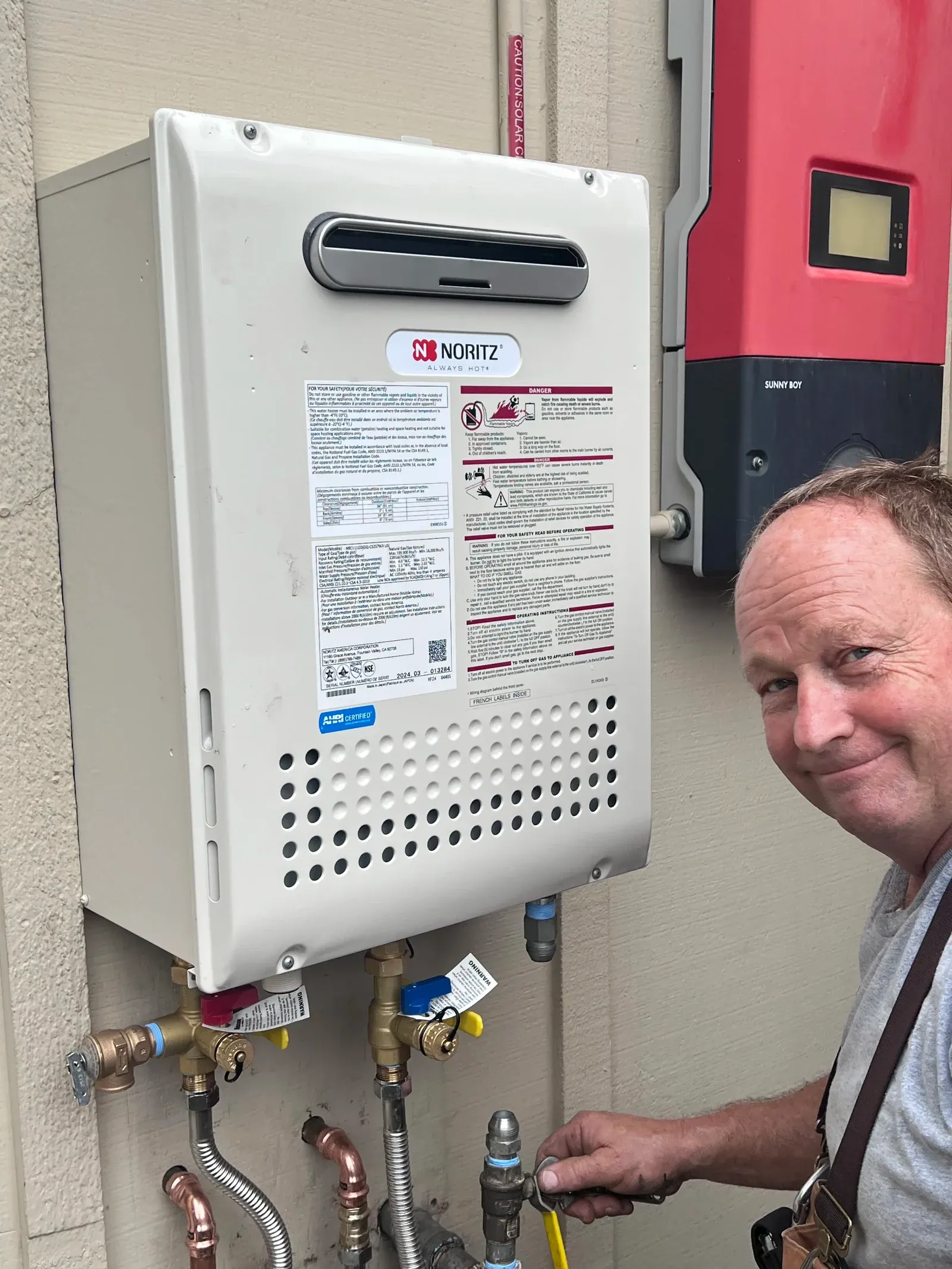
This is the detail I find myself explaining most often, and it is genuinely good news for a lot of houses. The 2027 date covers units rated under 75,000 BTU/hr. Residential gas tankless units are typically rated 150,000 to 199,000 BTU/hr, because heating water on demand takes far more input than heating a tank slowly. That puts them squarely in the 75,000 BTU/hr to 2 million bracket, and that bracket's compliance date is January 1, 2031.
Don't take my word for it about your own unit — go and look. The BTU input rating is on the nameplate, usually a silver or white label on the front or side of the unit. That number, not the fuel type and not the brand, is what decides which date applies to you. If you would like a second pair of eyes on it, send me a photo of the label.
What is still open, as of July 25, 2026
The Air District has been working through affordability and availability problems with the 2027 date for small water heaters, and staff have published draft rule language along with an updated regulatory overview. These are proposals, not law. I am listing them because they are the difference between a decision you should make this year and one that can wait.
Small tanks may move to 2031
Staff have recommended extending the compliance date to January 1, 2031 for water heaters under 35 gallons, on the grounds that there is no heat pump equivalent in that size on the US market. They are also considering setting that threshold at 30 gallons instead of 35.
Hydronic systems may move to 2031
Systems that heat water and circulate it for space heating as well. A standard heat pump water heater is not a drop-in replacement for these, and the hydronic heat pump units that do exist carry a steep price premium.
A low-income and cost-burdened exemption
Proposed for property owners enrolled in programs like CARE, FERA or food stamps, or who are housing cost burdened — mortgage and property taxes at or above 28% of gross income. Proposed as one-time per address, requested through a web portal designed to grant it immediately.
Exemptions for high-heat businesses and emergencies
Restaurants, healthcare, assisted living and dry cleaners are named as high-heat-demand categories. There is also a proposed allowance for a temporary emergency gas water heater installed by a certified contractor.
Public comment on the draft closes August 13, 2026, and the Board is tentatively scheduled to consider the amendments in November 2026. Until that vote, January 1, 2027 remains the adopted date and the only one you can plan against with certainty. My own read: if your water heater is under 35 gallons or feeds a hydronic loop, there is a reasonable chance your date moves — but I would not stake a purchase on it before November.
Your compliant options
Heat pump water heater
The main compliant path, and the one the rule is written around. It moves heat rather than making it, so it runs at a fraction of the energy of electric resistance. It needs a 240V circuit, somewhere with enough air volume, and a condensate drain. In a garage — where most Concord water heaters already live — that is usually straightforward. In an interior closet it is the part of the job that needs real thought.
Gas tankless
Most residential gas tankless units are rated between 150,000 and 199,000 BTU/hr, which puts them in the 75,000 BTU/hr to 2 million bracket and therefore on the 2031 date, not 2027. If you want to stay on gas and your house can take the gas line and venting, this is the longest runway available.
Electric resistance
Compliant, cheap to buy, and expensive to run — roughly three times the energy of a heat pump for the same hot water. Worth considering only where a heat pump genuinely will not fit and gas is not an option. I will tell you honestly if that is your situation.
Keep the gas tank you have
Nothing requires you to remove a working water heater, and repairing one stays legal. If yours is 6 years old and the anode rod is due, that is maintenance, not a countdown.
Whichever way you go, the install itself still has to meet California code — seismic strapping, thermal expansion control, relief-valve discharge, combustion air where gas is involved, and a permit. That does not change because the equipment changed. See whether your house suits a heat pump water heater for the compliant route most people end up on, what a permitted water heater installation involves for how that part of the job runs, or tankless installation and repair if the 2031 route is the one that suits your house.
What it costs
The Air District's own analysis is the most useful public number here. Staff estimate the average incremental cost of installing a heat pump water heater on a standard project at roughly $3,500 above a like-for-like gas replacement. Of that, the equipment itself accounts for only about $600 to $1,600 — the rest is the work around it.
That ratio is the honest headline: on a heat pump conversion, most of the extra money goes into the house, not the box. What drives it in practice is whether there is a 240V circuit within reach and capacity in the panel, where the condensate can drain to, and whether the location has enough air volume for the unit to work as rated. A garage installation in Concord with panel space nearby sits at the low end of that spread. An interior closet needing a new circuit run and a condensate pump sits at the high end.
I am not going to quote you a figure on a web page for a job I haven't looked at. What I will do is tell you before any work starts which of those cost drivers your house actually has, because that is the entire difference between the two ends of the range.
Rebates: the picture got thinner in 2026
This is where the internet will actively mislead you, because most of the guides ranking for heat pump rebates were written in 2024 and never revised. As of July 25, 2026:
- MCE's rebate of up to $3,175 is the one substantial program left, and it is open only to MCE electricity customers using a contractor from MCE's own list. Nine of the twelve cities we serve are MCE member communities.
- The BayREN heat pump water heater rebate has ended. Their own page puts it plainly: no longer available as of April 2024. It is still the $1,000 figure most Bay Area plumbing sites lead with.
- TECH Clean California exhausted its funding and stopped taking new applications. Guides still quoting $1,000 to $3,100 from TECH are describing a program you cannot currently apply to.
- The federal 25C tax credit is gone. It was terminated for equipment placed in service after December 31, 2025. If you are reading that a heat pump water heater earns a 30% credit up to $2,000, that applied to 2025 installs and does not apply to yours.
Rebate programs open, close and change amounts faster than any web page keeps up with, mine included — which is exactly why this section carries a date and a review commitment rather than a confident dollar total. What you can actually claim in Contra Costa goes through each program with its own verification date. Verify current availability before you count on it, and treat any figure without an “as of” date as unreliable.
What I would actually do
If your water heater is healthy, do nothing about this rule. Drain a couple of gallons off the tank once a year, keep an eye on the anode rod if the unit is past six or seven years, and let it run. The rule does not touch you.
If it is at the end of its life — 10 years or more, rusty fittings, recovery slowing, or a tank that has already wept once — then the useful move is not to rush a purchase. It is to find out now what your house can take. Whether there is panel capacity and a drain path for a heat pump unit, or whether the gas line and venting suit a tankless conversion, is a 20-minute answer, and having it in hand means the decision on failure day is a phone call rather than a gamble.
And if it fails in January 2027 with none of that settled: you will still get hot water the same day. Gas stock manufactured before the date remains legal to install, tankless is on the 2031 clock, and heat pump units are available now. The rule narrows the options; it does not remove them.
Frequently Asked Questions
Get answers to common plumbing and water heater questions
Is there a gas water heater ban in the Bay Area in 2027?
Not a ban on owning or using one. BAAQMD Rule 9-6 sets an emission standard of zero nanograms of NOx per joule of heat output, and prohibits selling or installing a gas water heater under 75,000 BTU/hr that was manufactured after January 1, 2027 and does not meet it. Your existing heater is unaffected, and units manufactured before that date remain legal to sell and install.
Do I have to replace my gas water heater before 2027?
No. This is an equipment emission standard applied at the point of sale and installation, not a retrofit requirement. There is no deadline by which an existing water heater must come out, no inspection that will flag it, and repairing it remains legal. Replace it when it needs replacing.
What happens if my water heater fails in early 2027?
You will have options, because the standard attaches to the unit's manufacture date rather than the date you buy it. Gas units manufactured before January 1, 2027 stay legal to install while they remain in the supply chain. Beyond that, gas tankless sits on the 2031 date, and a heat pump water heater is compliant. The honest risk is availability and lead time in the weeks after the date, not being left without hot water.
Does the 2027 date apply to tankless water heaters?
Usually not. The 2027 date covers units rated under 75,000 BTU/hr. Residential gas tankless units are typically 150,000 to 199,000 BTU/hr, which places them in the 75,000 BTU/hr to 2 million bracket with a January 1, 2031 compliance date. Check the nameplate on your own unit rather than assuming — that BTU rating is the only thing that decides which date applies.
Could the 2027 date change?
Yes, and as of July 25, 2026 it may. The Air District has published draft amendments that would extend the date to January 1, 2031 for water heaters under 35 gallons and for hydronic systems, and add exemptions including a low-income and cost-burdened category. Public comment closes August 13, 2026, and the Board is tentatively scheduled to decide in November 2026. Nothing is final until that vote.
Which counties does the rule cover?
The nine-county Bay Area Air Quality Management District, which includes all of Contra Costa County — so every city we serve, from Concord and Walnut Creek through Antioch and Danville. Neighbouring air districts set their own rules, which is why advice you read for Sacramento or the Central Valley will not match.
Sources
Every date and threshold above comes from the Air District's own material. Check it yourself — that is the point of listing it.
- BAAQMD — Building Appliances Rule Implementation
- BAAQMD — Rules 9-4 and 9-6 Building Appliances (rule development)
- BAAQMD — Regulation 9, Rule 6: NOx from Natural Gas-Fired Water Heaters
Last verified July 25, 2026. Next scheduled review December 1, 2026, after the Board is expected to act on the Rule 9-6 amendments. This page is general information about a regulation, not a substitute for the rule text or advice on your specific installation.
Not sure which date applies to your water heater?
Send me a photo of the nameplate, or call and describe the unit. I will tell you whether you are on the 2027 or the 2031 clock and what your house can take — before anything fails.
Owner-operated. 38 years in Contra Costa, CA #525190.